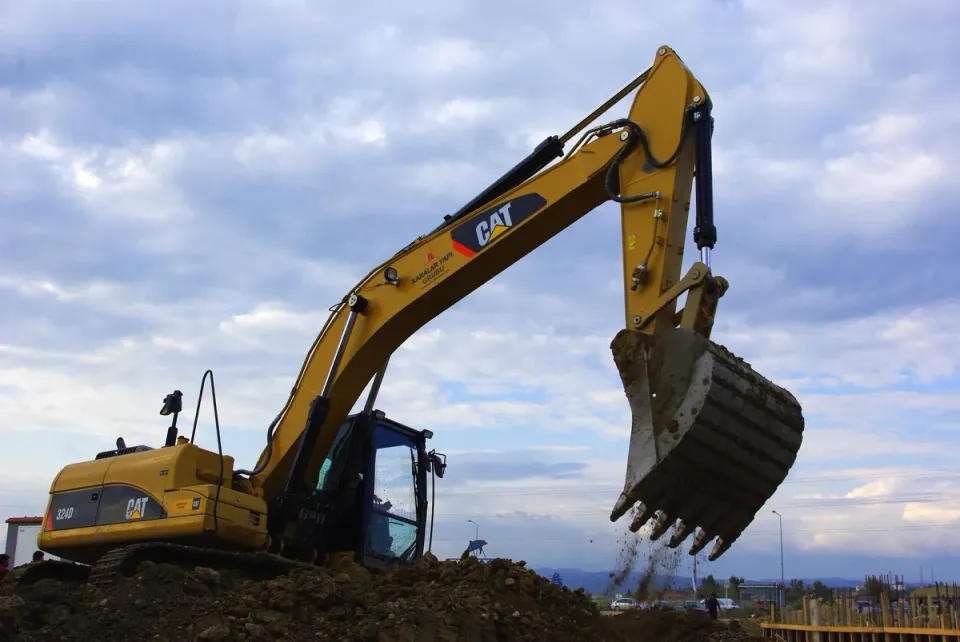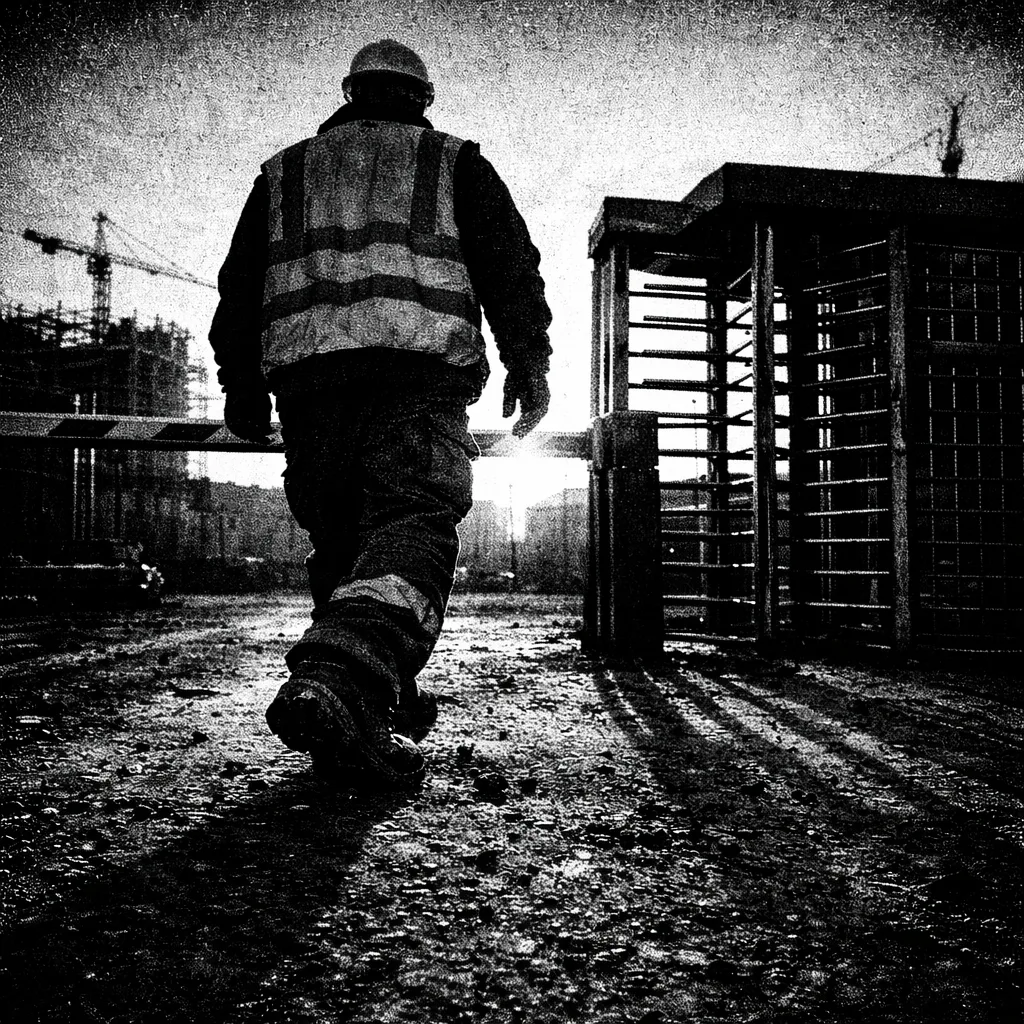
With thanks to Vinnie Ellis, Site Supervisor, for the ground truth.
Nobody writes this part. So here it is.
7am
Start time is 7am. Arrive at 6:45. Fifteen minutes early is standard on site. Not a personal choice. It is the unwritten rule. You are not keen, you are on time. Turning up at 7:01 is late.
New steel toe boots that are already giving you blisters. Hard hat with the gloss gleaming. Hi-vis fresh out of the packet.
Here is the first thing nobody tells you: you look brand new. Everyone can see it. Take the sheen off the hard hat. Scuff the boots before you go. Wear them a few days beforehand with thick socks. Not because you need to perform experience you don't have. Because you will be more comfortable and you will not spend day one limping.
Bring your PPE. All of it. Better to look keen than get turned away at the gate.
The gate
Every site runs differently. When you reach the gateman, ask for the site office, or give the name of whoever you are there to see. Before you go, get a name and a number from the agency. Someone specific on site who knows you are coming. Walking in blind makes a hard morning harder.
Have your PPE on before you get out of the vehicle. Hard hat goes on as you step out. Green Card ready.
The gateman is not just security. On a large site he holds a CSCS card and a traffic marshal ticket. A qualified role responsible for controlling site entry, exit and vehicle movement. He is checking your card because he is accountable for who is on that site.
On a major project (EKFB, for example, the Eiffage Kier Ferrovial BAM joint venture delivering 80km of HS2 civil engineering works) eye protection is standard practice at the gate, actively checked. On mid and lower tier sites it is hit and miss. It should not be. Bring yours regardless.
What is a traffic marshal ticket?
The induction
Anywhere from twenty minutes to an hour. Pay attention.
Here is what it covers: the F10 (the site-specific notification document), fire assembly points, break times, welfare units, start and finish times, minimum PPE requirements, nearest hospital, the red and yellow card system. Yes, like football. A yellow is a warning. A red is off site. Mobile phone rules, parking, first aid locations, no-go zones, what the emergency siren sounds like and where to assemble.
Sign here, here, and here.
This is not a formality. People get hurt on construction sites because they did not listen during induction and walked into a crane exclusion zone or stood under a load being lifted. The induction exists because someone got injured doing exactly what you might do on instinct.
After induction you get introduced to your supervisor. Tea break is 10 to 10:30. Lunch is 1 to 1:30. Pack your own. Bring a hot flask. Some sit in the canteen. I sat in the car.
On site
Zero tolerance on drugs and alcohol. You get surprise tests with no warning. The general rule: do not drink on a Sunday night. This is not a joke.
Walk with purpose. Brisk and intentional. Dragging your feet gets noticed, and not in the way you want.
As a Green Card holder your first jobs are the backbone of the site: keep it tidy, make sure barriers are laid out, help the trades. You are watched. Do not think you can disappear and scroll your phone. It does not work like that. If you run out of tasks, find something. Grab a broom. If you have genuinely done everything, go to your supervisor and tell them. Communicate. Get on side with who matters and life becomes easier. I will leave the rest of that for you to figure out.
It is loud. Forklifts reversing with that piercing beep. Angle grinders screaming. Generators humming. Radio from three different directions. Someone shouting over all of it.
Wear your ear protection. This is not optional and it is not soft. Noise-induced hearing loss is one of the most common occupational health issues in UK construction. Tinnitus does not go away. Once it starts, you have it for life. The ringing at 2am when you are trying to sleep. The constant hum behind every conversation. Protect your hearing from day one, not day one hundred.
Read: Ear protection, tinnitus, and what nobody tells new site workers
The tea break
Sacred. Non-negotiable. The kettle is the most important piece of equipment on any site. This is where you learn names, find out who is worth listening to, and discover the unwritten rules that no induction covers.
The banter is relentless. Thick skin required. It is not personal. If they are not having a go at you, they have not noticed you yet. When they start, you are part of the crew.
The foreman adds you to a WhatsApp group before lunch.
By 4pm
Your back hurts. Your hands are raw. Your hi-vis is filthy. You have learned more about how buildings actually work than three years of watching Grand Designs.
You are tired in a way that an office job (or what is left of office jobs) never made you tired. It is physical, real, tangible. You moved things. You built something. Or at least you helped someone build something.
That is day one.
Day two is easier. Day thirty, you are part of the site. Day ninety, someone asks if you have thought about getting your NVQ.
Say yes.
Related:
- Your Job Is Not Safe. Here Is What To Do About It.
- CSCS Green Card: Full Guide
- Ear Protection, Tinnitus, and PPE on Site
- Traffic Marshal Ticket (NPORS N403)
- Find CSCS Training Near You
Field Contributor: Vinnie Ellis, Site Supervisor, UK Construction
If you are about to start on site for the first time, good luck. Show up. Listen. Ask. Wear your ear protection. The rest follows.